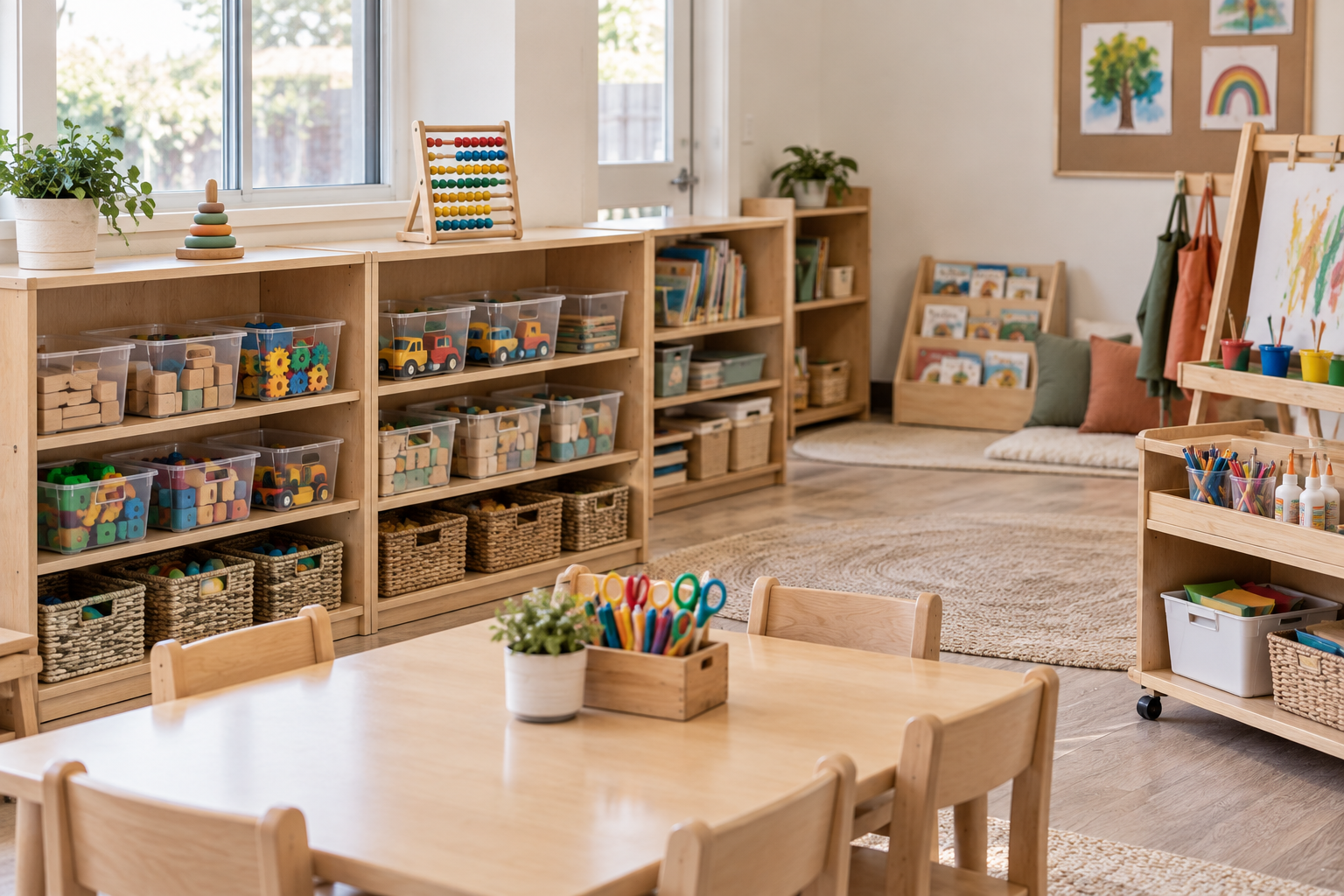
If you work in a preschool classroom, you probably know how quickly an organized space can turn into a busy one. Art supplies come out, books move around, paperwork piles up, and somehow the things you use every day never seem to be where you need them. As an ECE teacher myself, I’ve learned that classroom organization doesn’t have to look perfect — it needs to make everyday teaching and learning easier.
In this post, I’m sharing seven simple preschool classroom organization ideas that can help create a space that feels calmer, works better for teachers, and makes it easier for children to access, use and return the things they need.
Disclosure: As an Amazon Associate, I earn from qualifying purchases.

1. Give Everyday Supplies a Permanent Home
One of the simplest ways to keep a preschool classroom organized is to give the things you use every day a consistent home. When scissors, markers, glue, tissues, wipes or other frequently used materials keep moving from one place to another, teachers spend more time looking for them — especially during busy transitions.
Keep everyday supplies close to where they are actually used. For example, art materials can stay near the creative area, while commonly used teacher supplies can have their own small caddy, drawer or shelf. The goal isn’t to fit everything into perfectly matching containers. It’s to create a simple system that you and the other teachers in the room can easily maintain.
Teacher tip: Before buying more organizers, look at what you already have. If a storage system takes too much effort to put back together at the end of the day, it probably won’t stay organized for long.
2. Use Open Bins and Baskets Children Can Access
In a preschool classroom, storage isn’t only about keeping things tidy. When children can clearly see and reach appropriate resources, they can make choices more independently and begin learning where things belong.
Open bins and baskets work well for items such as blocks, puzzles, books, loose parts and dramatic play materials. Try not to overcrowd them. A smaller selection of clearly organized resources is often easier for children to explore — and much easier to return when it’s time to tidy up.
Place child-accessible materials on low shelves and group similar items together. You can also rotate resources instead of displaying everything at once. This helps keep the learning environment inviting without filling every shelf and basket.
Teacher tip: Think about organization from a child’s height. Sit or kneel where the children play and look around the room. Can they see what is available? Can they reach it safely? And is it obvious where it should go back?

3. Use Simple Labels to Make Tidying Easier
Labels can make classroom organization easier for both children and teachers. Instead of relying only on adults to remember where every resource belongs, a simple label gives everyone a visual reminder of where things should go.
For preschool children, try using pictures together with words on bins, baskets and shelves. A photo or simple image of blocks, cars, puzzles or art materials can help children identify the correct storage space even before they can read the written label.
Keep the system simple and consistent. You don’t need to label every single item in the classroom — focus on the areas where resources are frequently used, moved and returned.
Teacher tip: Place the label where children can actually see it. For younger children, labels positioned at their eye level are much more useful than beautiful labels placed where only adults notice them.
4. Create a Simple System for Classroom Paperwork
Paperwork can pile up surprisingly fast in an early childhood classroom — activity plans, children’s artwork, forms, notes, observations and resources waiting to be used. Without a clear system, even a small pile can quickly become something you keep moving from one surface to another.
Try giving different types of paperwork a specific place. You might use trays, folders or a small desktop organizer for things that need action, things that need filing and resources you use regularly. The simpler the categories are, the easier the system will be to maintain during a busy week.
It also helps to deal with paper regularly rather than waiting for one big clean-up. Even a few minutes at the end of the day or week can prevent the teacher workspace from becoming another storage area.
Teacher tip: Avoid creating too many categories. If you have to stop and think about where a piece of paper belongs, the system may be more complicated than it needs to be.
A practical option: If paperwork tends to collect on your desk, a multi-tier desktop organizer can help give active papers, folders and everyday supplies their own place. This WALI desk file organizer is one example that combines paper trays, upright file storage and smaller compartments in one compact setup. You can see the organizer and check whether the size and layout would work for your teacher workspace here.
5. Organize Art Supplies by How You Actually Use Them
Art areas can become messy very quickly because so many different materials are used throughout the week. Instead of organizing everything simply by what it is, think about how you actually use the materials during activities.
Keep frequently used supplies such as crayons, markers, glue sticks and child-safe scissors together and easy to grab. Materials used less often can stay in separate storage until they are needed. Small containers or caddies can also make it easier to bring a selection of supplies to a table and return everything afterward.
For materials children can access independently, keep the choices manageable. You don’t need to display every art resource you own at the same time. Rotating materials can help keep the area organized while still giving children plenty of opportunities to explore and create.
Teacher tip: Before choosing storage, think about the whole routine: Where will children use the materials? How will you bring them out? And how easily can they be returned afterward? The best organization system is one that works during the activity and during clean-up.

6. Use Vertical Space When Floor Space Is Limited
When classroom space is limited, organization doesn’t always mean adding another shelf or piece of furniture. Sometimes the most useful storage space is already there — on walls, doors or other safe vertical areas.
Wall pockets, hooks, hanging organizers and display rails can help keep selected materials off tables and work surfaces. Vertical storage can be especially useful for teacher supplies, paperwork, art materials or lightweight resources that need to stay within easy reach.
Be selective, though. Too much hanging storage or too many displays can make a preschool environment feel visually busy. Use vertical space where it solves a genuine storage problem while keeping children’s learning areas calm and inviting.
Teacher tip: Before adding vertical storage, check that it is securely installed and positioned safely. Keep anything intended only for adults out of children’s reach.
7. Keep Frequently Used Teaching Supplies Mobile
Some teaching supplies don’t belong in just one area of the classroom. You might use the same materials during circle time, small-group activities, art experiences or throughout different parts of the day. In these cases, a mobile organization system can be more practical than giving everything a permanent spot on a shelf.
A small rolling cart or portable caddy can hold the resources you reach for most often and move with you when needed. The key is to keep it purposeful rather than turning it into another place where miscellaneous supplies collect.
Give each section of the cart or caddy a clear purpose and regularly remove anything you are no longer using. This keeps frequently used materials accessible without cluttering tables and learning areas.
A practical option: If you regularly move teaching materials between different areas of the classroom, a 3-tier rolling cart can keep frequently used supplies together while still making them easy to move when needed. See the rolling teacher cart here to check whether the size and storage layout would work for your classroom.
A More Organized Classroom Doesn’t Have to Be Perfect
A well-organized preschool classroom isn’t one where everything stays perfectly tidy all day — especially when children are actively playing, exploring and learning. What matters is having simple systems that make it easier for children and teachers to know where things belong and to reset the space when needed.
Start with one area that causes the most frustration in your classroom and make one small change. You don’t need matching containers or an expensive classroom makeover. Often, the most useful organization ideas are the ones that are simple enough to keep using on your busiest days.
I hope these preschool classroom organization ideas give you a few practical ways to make your classroom feel calmer, easier to manage and more supportive of everyday learning.
Looking for more practical preschool ideas? Explore LGs Little Learners Hub for classroom inspiration, organization ideas, activities and resources designed for real early learning spaces.
Leave a Reply